The four supplement questions women are asking in 2026
Creatine, menopause formulas, vitamin D and pregnancy supplements are everywhere. The evidence—and the rules—do not travel as a package.
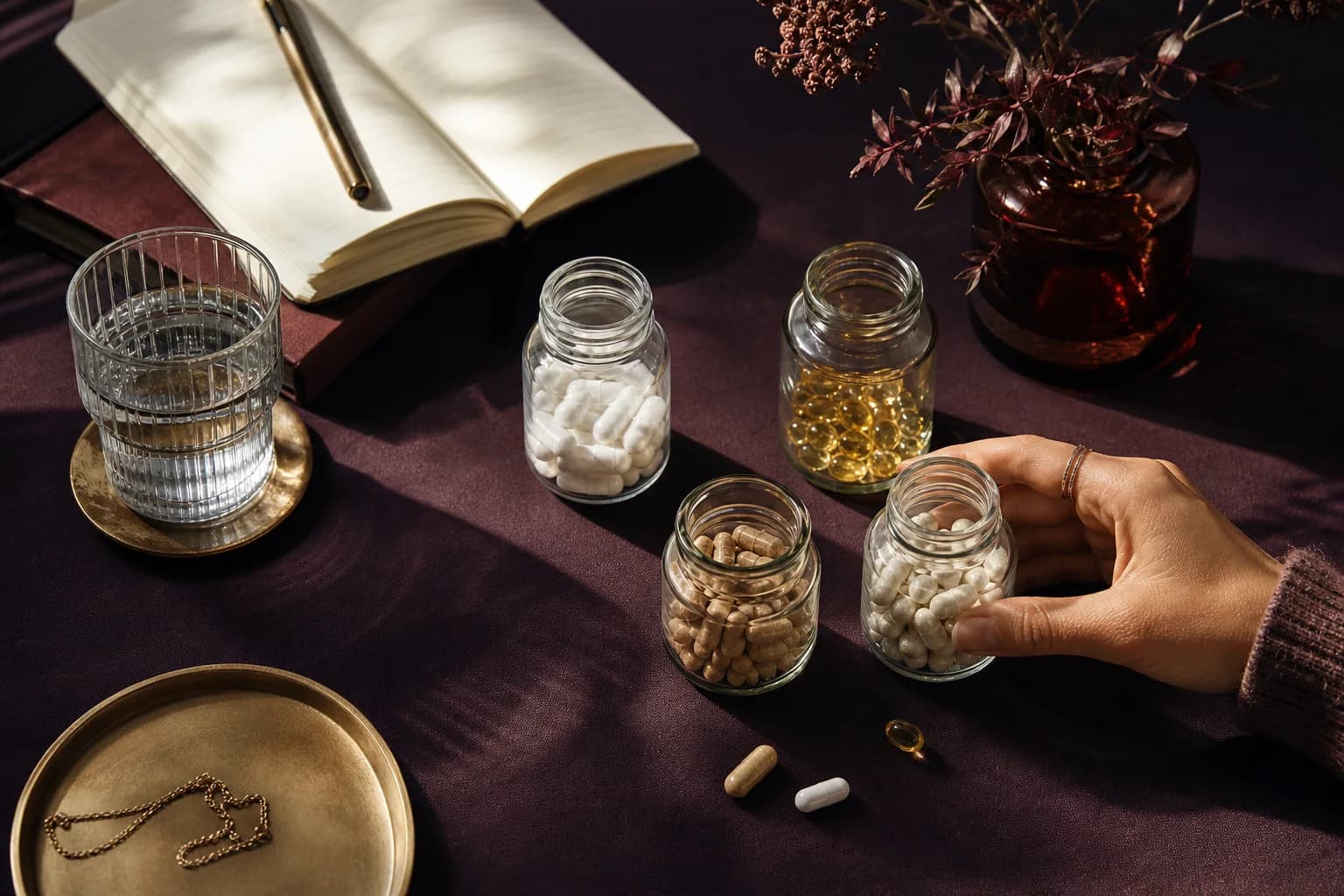
Original image by Anecdotal
The most useful 2026 women’s-supplement questions are not “what is everyone taking?” but what population was studied, which formulation was used, whether a claim is legally authorised and whether pregnancy, menopause or medication changes the risk.
Why this matters
Women’s wellness marketing often compresses very different life stages into one market. Separating perimenopause, pregnancy, training and general nutrition prevents a trend from looking like universal guidance.
Creatine interest is moving beyond sports nutrition
A randomized double-blind study published in 2026 examined low-dose creatine formulations in 36 perimenopausal and postmenopausal women. That makes the study relevant to a fast-growing conversation, but its small sample and specific formulations limit what can be generalized. It does not make every creatine product a menopause product.
The useful questions are whether an outcome was pre-specified, how large the difference was, whether it held across groups and whether another study reproduced it. Product marketing often moves faster than that replication process.
Life stage changes the supplement conversation
The UK Food Standards Agency’s June 2026 consumer guidance distinguishes situations where official advice exists—such as folic acid around early pregnancy and vitamin D during autumn and winter—from broader commercial claims. It also states that supplements are not medicines and cannot be marketed to treat symptoms such as menopause symptoms.
The practical filter is simple: identify the life stage, the nutrient or ingredient, the evidence population, the formulation and possible interactions. “For women” on a label is a marketing category; it is not evidence that every woman has the same need.
Question one: was the ingredient or the finished product studied?
A study on one form, dose and schedule cannot automatically support every product carrying the same ingredient name. Creatine is a good example: formulation, amount, duration and the people enrolled all shape what a trial can tell us. A menopause label added later does not widen the original evidence.
The same problem appears with blends. If a capsule contains six ingredients, it may be impossible to know which component is meant to drive the claim or whether the combination itself has ever been tested.
Question two: does the evidence match this life stage?
Pregnancy, perimenopause, postmenopause and high-level training are not interchangeable categories. Nutrient needs, medication use and the reasons for taking a supplement may change between them. Evidence from healthy young athletes cannot be quietly relabelled as evidence for every woman.
Look for the age range, health status and life stage of the people in the study. If that information is missing from the marketing, the headline is doing more work than the evidence.
Question three: is this nutrition language or a medical promise?
UK rules allow specific authorised health claims when their conditions are met. They do not let a food supplement promise to treat menopause symptoms or another medical condition. Similar lines exist in other markets even though the wording and enforcement differ.
This is why two products with nearly identical ingredients can make very different claims. The most dramatic sentence on a product page is often the first thing worth checking against the regulator’s wording.
Question four: what else is already in the routine?
A single product rarely enters an empty cupboard. Multivitamins, fortified foods and separate vitamin or mineral products can overlap. Medicines and existing conditions can also change the relevance of an ingredient.
A useful review looks at the whole list rather than evaluating each bottle in isolation. The question is not simply what a product contains, but what the total routine adds up to.
What this is based on
Built from current UK and US guidance plus a small randomized creatine trial. It is not a shopping list.
Official guidance · Independent
Sources
Go straight to the source.
- 01Food supplements guidancegovernment
UK Food Standards Agency · 2026-06-25
- 02CONCRET-MENOPA randomized controlled trialresearch
PubMed · 2026-03-01
- 03Dietary Supplements: Tips for Womenregulator
US Food and Drug Administration
Stay in the loop.
The women’s wellness stories worth opening, in one weekly email.
We never sell or share your email. Unsubscribe in one click.
Keep reading
More like this.

What the UK’s new supplement guidance changes for shoppers
The June update covers authorised claims, interactions and the line supplement labels cannot cross when they talk about symptoms.

Nearly half of dementia risk may be modifiable. WHO has updated the list.
The 2026 guidance adds air pollution to a familiar mix of movement, smoking, alcohol, diet, social connection and long-term health conditions.

Lifelong training leaves a molecular mark on muscle
A new Nature Aging study compared trained and untrained muscle to see what decades of exercise leave behind—and how older muscle still responds.