A new human cell atlas is changing how researchers see ageing
“Senescent cells” are often discussed as one target. The first large-scale atlas shows a far messier picture across tissues and stages of life.
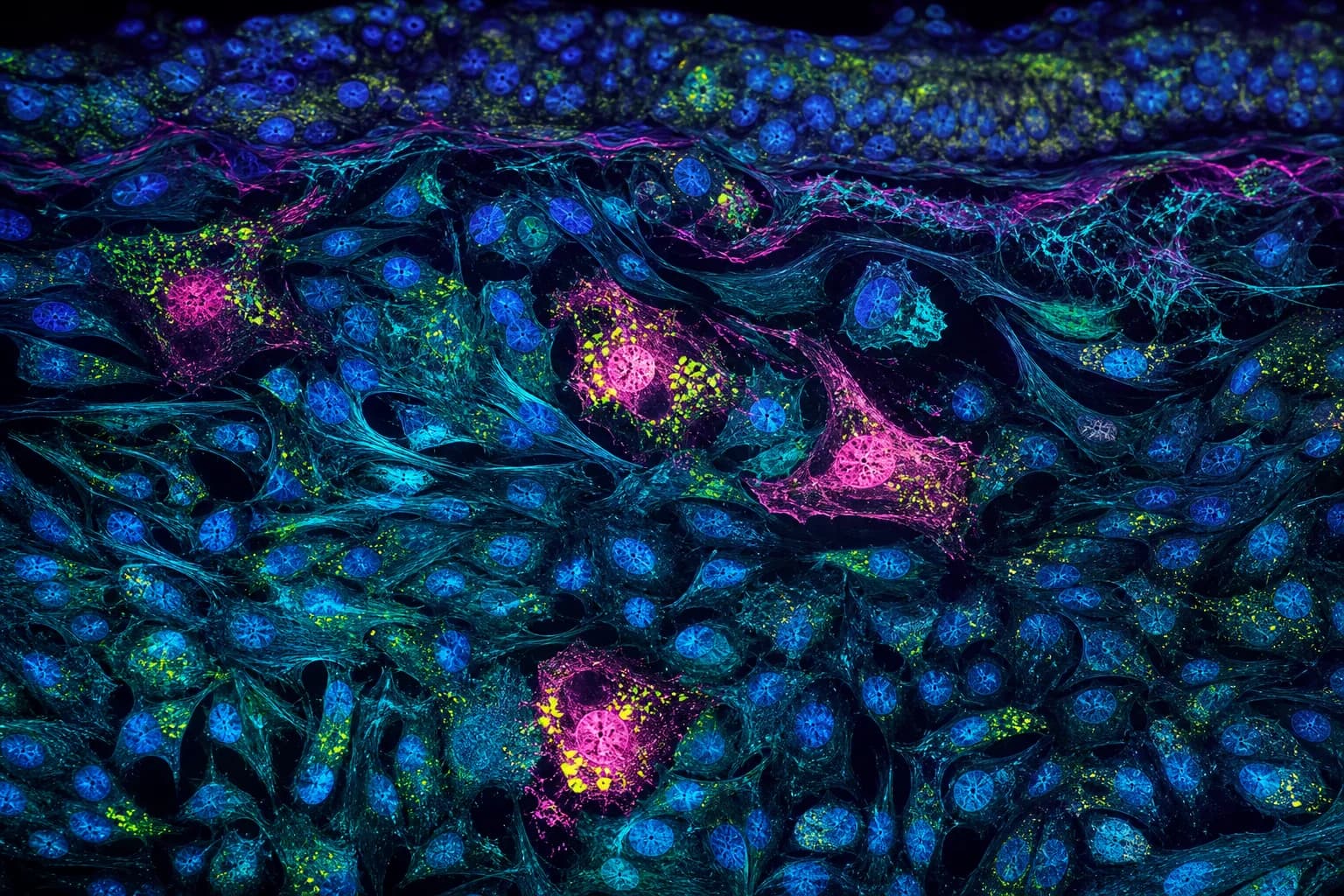
Original image by Anecdotal
NIH-funded researchers created tools and atlases to identify different senescent-cell states across human tissues, including a catalogue built from 14 human cell types.
Why this matters
“Senescent cells” are often discussed as one target in longevity marketing. The new work reinforces that they are heterogeneous and that location, cell type and biological context matter.
What the researchers built
The Cellular Senescence Network is developing public atlases of cells that stop dividing but remain biologically active. One team created the Senescence Catalog, or SenCat, using gene-activity and protein patterns across 14 types of human senescent cells.
The work identified distinct “senotypes” as well as pathways that appeared across several cell types. Other teams examined circulating signatures and the spatial organisation of immune ageing in lymph nodes.
What the work does not establish
The atlas may improve future measurement and target selection, but it does not validate a supplement, drug or clinic treatment marketed as “senolytic.” Mapping a biological state is an earlier step than showing that changing it improves meaningful outcomes in people.
That gap—between a compelling mechanism and a demonstrated consumer benefit—is one of the most important distinctions in longevity coverage.
Why finding the right cells is difficult
Senescence is a cellular response, not a single uniform cell type. Cells can enter that state after different kinds of stress, and the signals used to identify them may vary by tissue. A marker that is useful in one organ may be less informative somewhere else.
That makes measurement central to the field. Researchers need to know which cells are present, where they sit, how their state changes with age and whether an intervention is affecting the intended population rather than healthy surrounding cells.
The consumer leap is still much larger than it looks
The word senolytic has already moved into supplement and clinic marketing. But identifying a biological target, changing a laboratory marker and improving a meaningful human outcome are three different achievements.
The atlas makes future trials more precise. It does not turn every product aimed at cellular ageing into a validated intervention. For now, the most important development is better visibility into the biology itself.
What this is based on
This is atlas-building and biomarker research, not evidence that a consumer anti-ageing treatment works.
Early research · Independent
Sources
Go straight to the source.
- 01Senescent cells mapped in human body over the lifespangovernment
National Institutes of Health · 2026-07-01
- 02NIH research establishes new framework for the role of senescence in aginggovernment
National Institutes of Health · 2026-06-11
Stay in the loop.
The research stories worth opening, in one weekly email.
We never sell or share your email. Unsubscribe in one click.
Keep reading
More like this.

Lifelong training leaves a molecular mark on muscle
A new Nature Aging study compared trained and untrained muscle to see what decades of exercise leave behind—and how older muscle still responds.

Nearly half of dementia risk may be modifiable. WHO has updated the list.
The 2026 guidance adds air pollution to a familiar mix of movement, smoking, alcohol, diet, social connection and long-term health conditions.

The four supplement questions women are asking in 2026
Creatine, menopause formulas, vitamin D and pregnancy supplements are everywhere. The evidence—and the rules—do not travel as a package.